
Author

Dandora Movie Review: Muralikanth’s Dandora is a rural drama that tackles the deep-seated issue of caste discrimination from a unique perspective. Moving beyond the typical victim narrative, it explores the internal conflicts and societal repercussions within a dominant caste family. With strong performances and honest storytelling, it presents a thought-provoking, if occasionally slow, cinematic experience.
Dandora Movie Review
Rural love stories have always found favour on the Telugu screen. Village tales brought to life with authenticity have delighted audiences in recent times. The latest film to join this genre is Dandora. The trailer made everyone think—what is this movie’s concept? As this film releases for Christmas, does it have elements to entertain audiences? Have the emotions in this rural love story resonated with viewers’ hearts? Let’s find out in this Dandora film review.
Plot: Recently, many love stories based on caste discrimination have emerged. Dandora is a story woven against this very backdrop. In a Telangana village rife with caste hierarchy, Motubari Shivaji (Shivaji), who belongs to a dominant caste, also becomes a victim of this prejudice. Due to some reasons, he is at odds with his own son, Vishnu (Nandu). Even after his death, the village elders set a condition that his last rites cannot be performed in the cremation ground reserved for his caste. What is the reason the caste elders ostracize the high-caste Motubari Shivaji? What is the relationship between him and Sreelatha (Bindu Madhavi)? Who murdered Ravi (Ravikrishna), a person from a lower caste in the village? What are the consequences that unfold after this murder? What is the connection of the village Sarpanch (Navadeep) to this story? To know these and other details, you must watch the film.
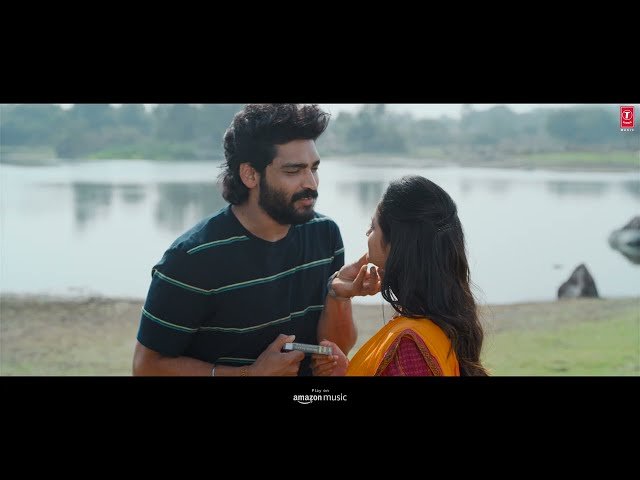
Analysis: Typically, such rooted stories, narratives that question society, caste discrimination, and inequalities have been made many times before in Tamil and Malayalam cinema. Tamil directors often analyze such topics in depth. Recently, Telugu directors have also been making similar attempts. Films like Palasa 1978, Love Story, and Courtroom have been crafted, questioning societal inequalities alongside caste bias. However, director Muralikanth has also made such an attempt with his debut film. But unlike previous cinematic paths, the Dandora director has presented this issue from a new angle.
His innovative storytelling is the main strength of this Dandora movie. Usually, films until now have come from the perspective of the victims suffering caste discrimination and inequality. But in this Dandora web series-like layered narrative, what kind of problems do the families who perpetrate such actions also face? What kind of humiliations must that family confront in society? What would be the anguish of that family’s members? The director has narrated these aspects very thoughtfully and in a way that tugs at everyone’s heartstrings in this film. Furthermore, the way it showcased the mental agony of individuals within dominant caste families and their helplessness in not being able to oppose the caste elders was also impressive.

From the very first scene, the director gives the impression that he is clear about what he wants to convey. Each scene is shown with depth and emotion, making the viewer absorbed in the story. However, the second half feels a bit stretched. A few scenes, feeling repetitive, induce fatigue. It would have been better if such scenes were presented more powerfully. To add commercial elements to such a rooted story, the screenplay needs a certain magic. In this regard, the director seems to have faltered slightly. The emotional depth in Shivaji’s role wasn’t fully realized. However, a flaw in one scene was redeemed by the strength of another. Notably, the climactic scenes are the soul of this film.
Cast Performance: The director succeeded in selecting artists apt for the roles in this Dandora movie. Everyone performed their roles competently and acted in a way that made their characters seem irreplaceable. Although Shivaji’s role is completely different from Mangapati’s, shades of that character were visible here and there. Bindu Madhavi as Sreelatha and Navadeep as the Sarpanch impressed. The other roles didn’t make as much impact. Mark K. Robin’s background score enhanced the power of the scenes. The cinematography effectively conveyed the mood of the story. Director Muralikanth has honestly conveyed the message he intended.
Final Verdict: Dandora is an honest attempt to tell a pertinent truth to this society. Audiences who enjoy rural love stories and rooted narratives can watch Dandora without any hesitation.
FAQs on Dandora Movie Review
Q: What is the main theme of the Dandora movie?
A: Dandora is a rural drama that explores the complex issue of caste discrimination and its repercussions, focusing on the internal conflicts within a dominant caste family.
Q: Who are the main actors in Dandora?
A: The film features Shivaji, Navadeep, Nandu, Ravikrishna, and Bindu Madhavi in pivotal roles.
Q: Who is the director of the Dandora film?
A: The film is directed by debutant Muralikanth.
Q: Is Dandora based on a true story?
A: While the film deals with realistic societal issues, it is a fictional narrative crafted to highlight the problems of caste hierarchy.
Q: How is the music in the Dandora movie?
A: The background score by Mark K. Robin is praised for effectively enhancing the emotional impact and mood of the scenes.
Disclaimer on Dandora Movie Review
This Dandora movie review is based on the author’s critical viewing of the film and reflects a subjective analysis. It is intended for informational purposes to help readers form their own opinions. The views expressed are personal and do not represent any official stance. Box office performance and individual viewer experience may vary.